Security Architecture
Built on Safe's
$100B+ Foundation
Kleidi extends Safe—the most battle-tested smart contract wallet infrastructure—with time-delayed execution, on-chain policy enforcement, and guardian systems designed for treasury-scale security.
Immutable infrastructure that continues operating even if every company involved ceases to exist.
Schedule a Briefing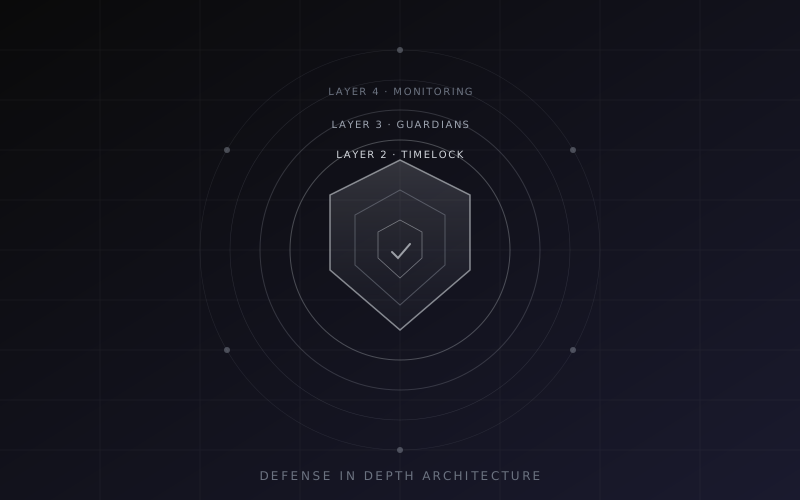
Verification
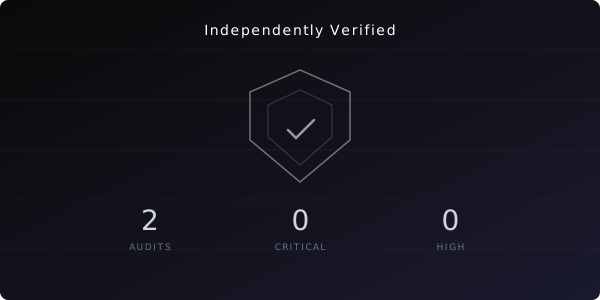
Independently Audited.
Zero Critical Issues.
Our smart contracts have undergone rigorous security audits by industry-leading firms and formal verification with the Certora Prover. Mathematical proofs of correctness, not just testing.
Defense in Depth
Five Layers of Protection
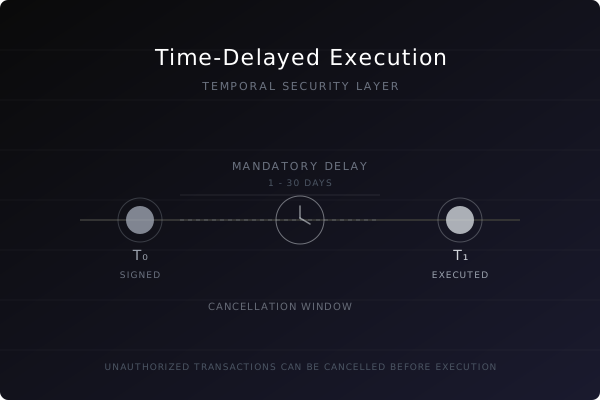
Time-Delayed Execution
Every transaction moving funds enters a mandatory waiting period before execution. This creates a critical window to detect and cancel unauthorized transactions, whether from compromised keys, phishing attacks, or coercion under duress.
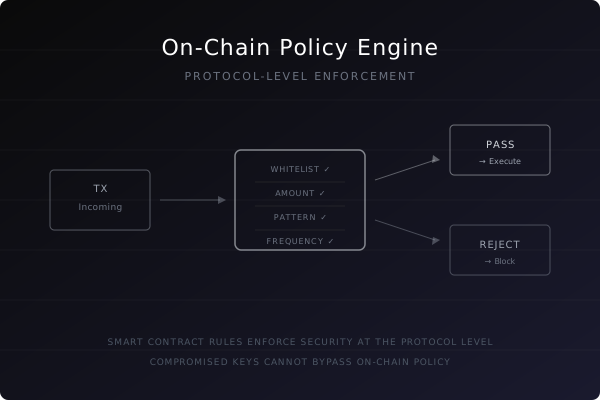
On-Chain Policy Engine
Smart contract rules enforce whitelisted addresses and transaction patterns at the protocol level. A transaction signed by a compromised wallet simply won't execute if it violates your policy rules.
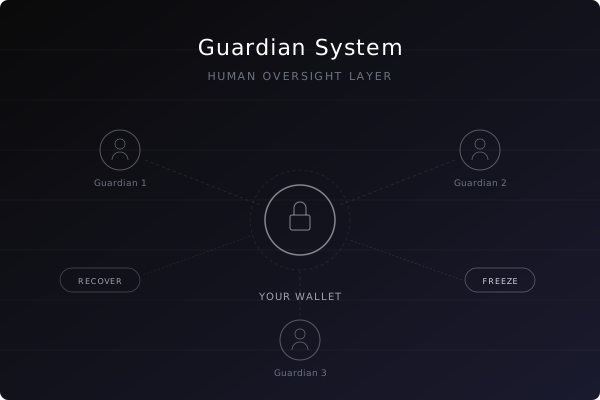
Guardian System
Designated guardians can immediately pause pending transactions upon detecting compromise. This human review layer catches threats that automated systems miss, buying time for cancellation of malicious transactions.
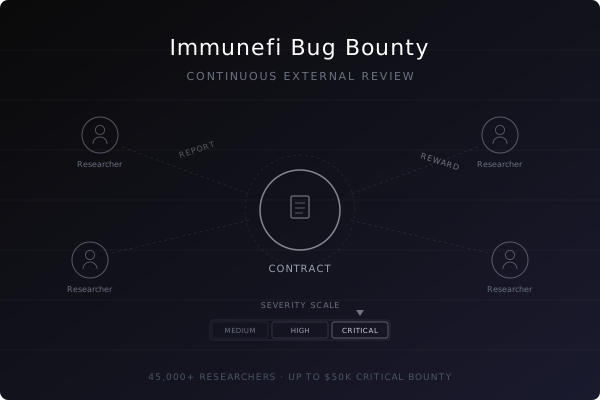
Immunefi Bug Bounty
Kleidi's Immunefi bug bounty program creates an incentive for over 45,000 security researchers worldwide to find and report vulnerabilities, with payouts up to $50,000 for critical findings.
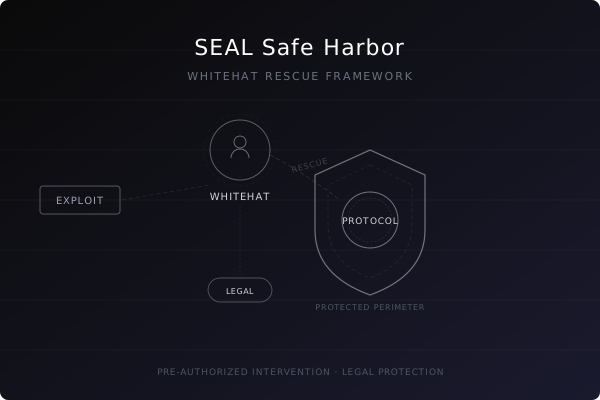
SEAL Safe Harbor
Kleidi has adopted the SEAL Safe Harbor Framework, pre-authorizing whitehat security researchers to intervene and rescue funds during active exploits — with legal protection — without waiting for explicit permission.
Threat Model
Treasury-Scale Threats
Cyber Threat Protection
Supply chain attacks, clipboard malware, and phishing can compromise signing devices without your knowledge.
The on-chain policy engine validates every transaction against your security rules before execution. A compromised hot wallet can only perform pre-approved actions, containing the blast radius.
Physical Threat Protection
High-value holders face coercion risks that don't apply to smaller holders. The $5 wrench attack is real.
Time-delayed execution creates a mandatory waiting period—from 24 hours to 30 days—before funds can move. If you're forced to sign under duress, the transaction can still be canceled during the delay window.
External Security
Security Ecosystem
Immunefi Bug Bounty
Continuous external review from over 45,000 security researchers on the largest crypto bug bounty platform. Up to $50,000 for critical smart contract vulnerabilities.
SEAL Safe Harbor
Pre-authorized legal protection for whitehat security researchers to rescue funds during active exploits.
Hot Wallet Speed.
Cold Wallet Security.
Five layers of on-chain enforcement between signing and settlement. No tradeoff between operational velocity and treasury-grade protection.
Talk to Our Team